


Beyond the Concrete:
Inside Korea’s Great Outdoor Revival
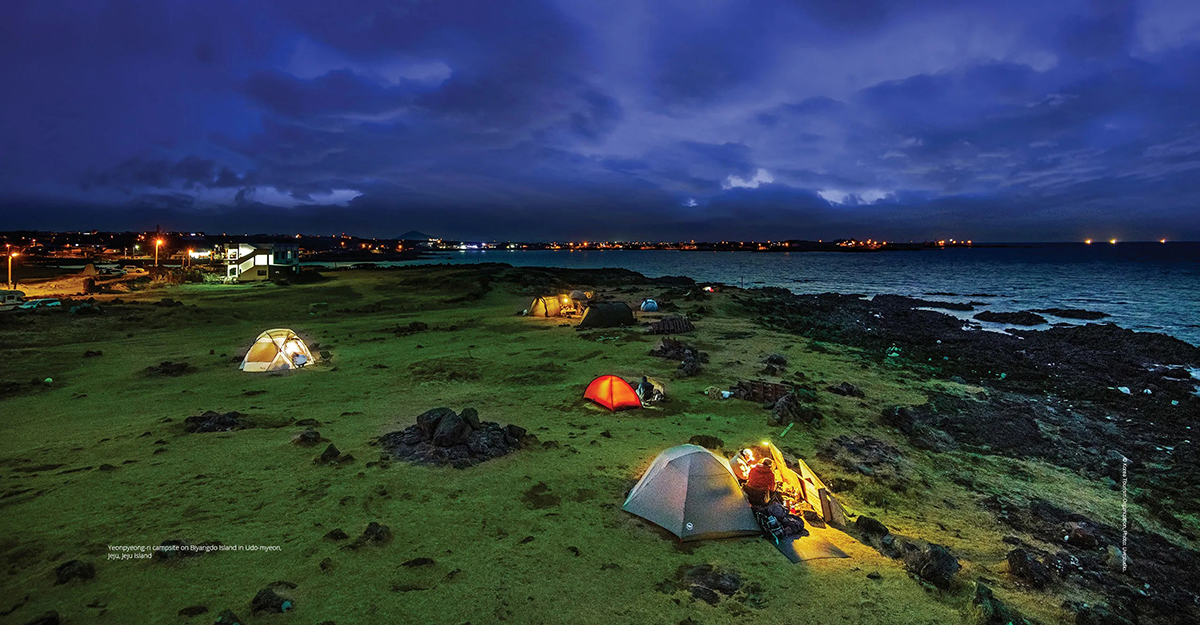
For modern urbanites rushing through their days amid towering skyscrapers and crowded asphalt, nature offers a rare escape hatch, a place to pause and catch their breath. Seoul, a megacity of nearly 10 million people, operates at a relentless pace, constantly demanding energy from those who live within it. Lately, however, a striking transformation has become a fixture of the city’s daily landscape: backpack-laden commuters boarding morning subway cars bound for nearby mountain peaks. This compelling paradox—pursuing the deep quiet of nature via the ultimate urban infrastructure—reveals a society fundamentally redefining the meaning of leisure.
Cover Story
Writer HwanKi Kim
The Great Outdoors Rush
In the past, when Koreans thought of mountain climbing or outdoor activities, a specific image came to mind: middle-aged hikers in brightly colored, thick technical jackets gathering in small groups at the entrances to mountains on weekends. However, the global pandemic became the pivotal moment that breathed fresh, youthful energy into Korea’s outdoor scene. As the 20- and 30-something generation actively sought safe havens away from confined indoor spaces and poured into mountains, trails and campgrounds, the entire landscape of Korea’s outdoor culture fundamentally transformed.
According to the Korea Forest Service’s 2025 National Awareness Survey on Hiking and Forest Trail Experiences, released in January 2026, about 73% of Korean adults visit a mountain or walk a forest trail at least once a month. That’s nearly three in four Korean adults heading for the hills. Today, on mountains like Inwangsan Mountain, Bukhansan Mountain and Achasan Mountain, you’ll easily spot young hikers in snug leggings and lightweight trail shoes, tumbler in hand, making their way across the paths. Social media has fueled this craze. Posts tagged with #hiking, #camping and #mountainnovice number in the tens of millions.
What’s particularly interesting is that this trend is being closely watched internationally. As non-Koreans who encountered Korea through K-pop and K-dramas began to take an interest in the real everyday lives of Koreans, K-outdoor emerged as a new tourism phenomenon. On weekends, the sight of international tourists in hiking boots boarding the subways toward Bukhansan Mountain has transcended being a passing trend to become a cultural marker. They are captivated by Korea’s unique charm—a spectacular juxtaposition of vibrant urbanism and majestic nature rarely seen in any other major city worldwide.
-
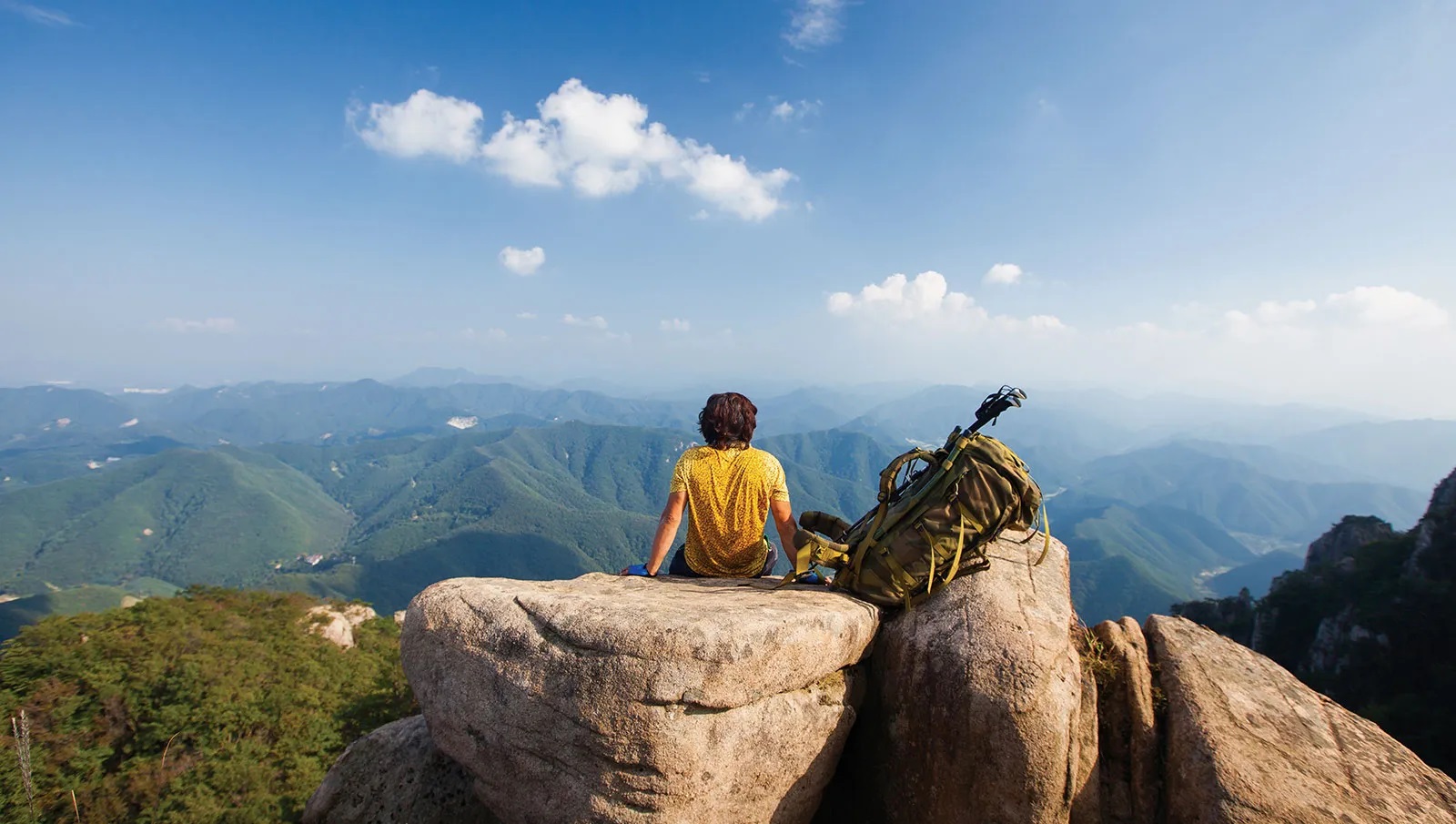
A visitor takes in the view at Daedunsan Mountain in Nonsan, Chungcheongnam-do Province. © TongRo Images Inc.
-
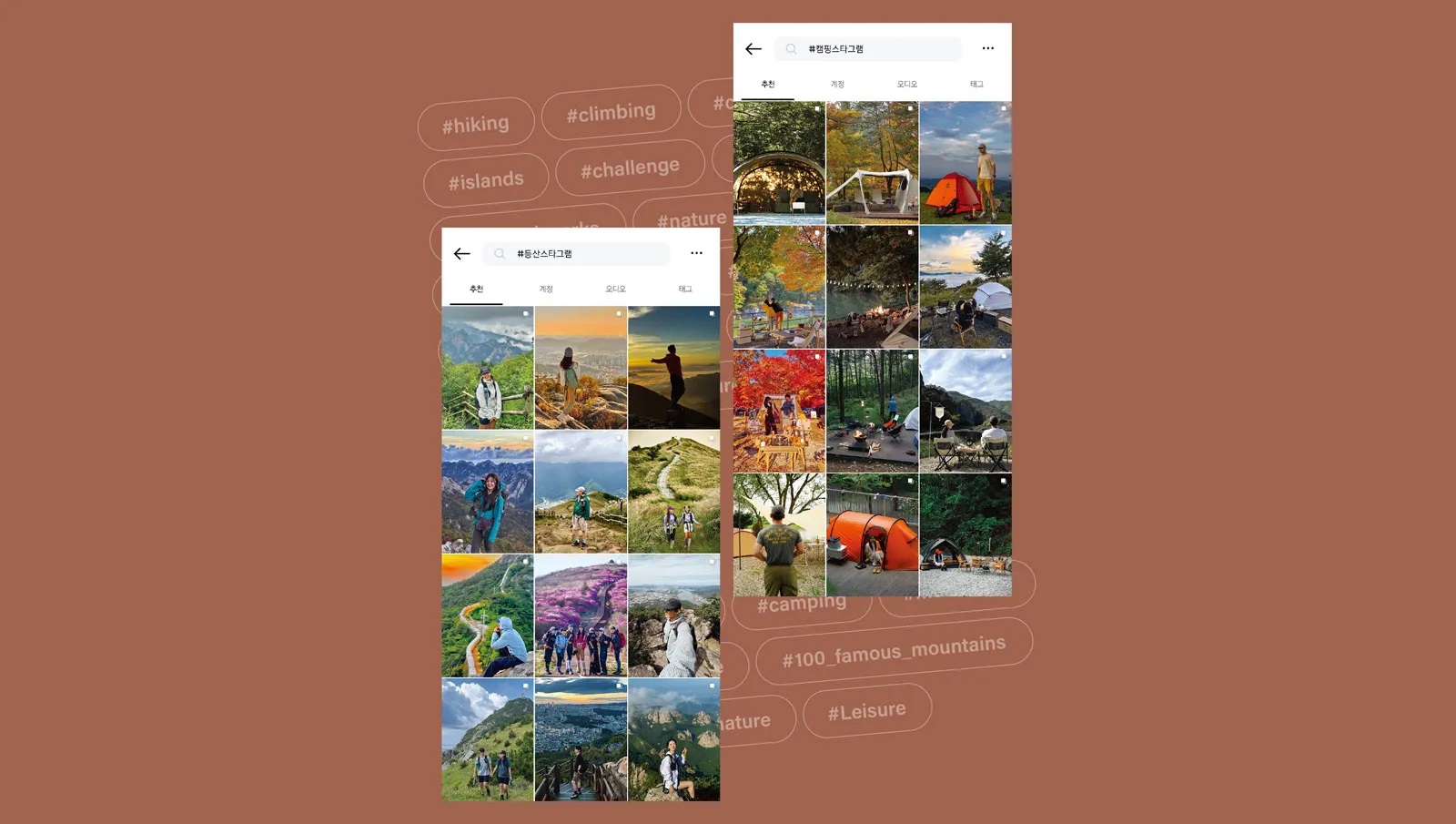
(Left) Search results on Instagram for the hashtag “등산스타그램” (Deungsanstagram, blending deungsan, Korean for hiking, and Instagram)
(Right) Search results on the platform for the hashtag “캠핑스타그램” (Kaempingstagram, blending kaemping, Korean for camping, and Instagram)
Landscapes Defining the Outdoor
Scene Looking deeper into Korean outdoor culture reveals a unique cultural landscape shaped by Korea’s geography and the distinctive social temperament of its people. Several key characteristics that define today’s Korean outdoor scene include the following.
1) Nature Within Arm’s Reach
Consider the world’s major cities. While Parisians, Londoners and New Yorkers must clear their weekends and drive far out to the suburbs to experience a proper forest, Seoulites can be nestled in the embrace of massive granite mountains like Bukhansan Mountain, Dobongsan Mountain and Gwanaksan Mountain in just thirty minutes via public transit. By Sunday morning, places like Ui-dong Meeting Square and Cheonggyesan Station transform into massive base camps for countless hikers. For Koreans, mountains aren’t distant, unfamiliar destinations requiring careful planning—they are extensions of local neighborhoods where people shake off the fatigue of daily life. Recently, night hiking, where climbers ascend mountains while enjoying nighttime city views after work, has become wildly popular among the 20- and 30-something crowd. Walking along the Inwangsan Mountain fortress wall under Seoul’s glittering night sky exemplifies how intimately nature and everyday life have become intertwined.
2) Bonding on the Trail
While Western outdoor culture emphasizes individualistic introspection and solitary communion with the wilderness, Korean outdoor culture is thoroughly about togetherness. Even if you hike alone, you can connect with others by sharing a tangerine at the summit with strangers. After descending, the day’s journey is complete only once you have gathered with your companions at a nearby restaurant for post-hike socializing—enjoying dubukimchi (bean curd with stir-fried kimchi) and jeon (savory pancakes) paired with makgeolli (unrefined rice wine). Moreover, a new culture has taken root where strangers with shared interests gather through social media and apps to climb mountains or run together as running crews or hiking crews. This reflects Koreans’ unique communal spirit—seeking loose connections while sharing sweat and belonging in nature—evolved into a modern, refined form.
3) Connected, Convenient and Safe
Korea’s mountains and campgrounds are less raw, untamed wilderness and more like meticulously managed vast gardens designed for human comfort and safety. Treacherous rocky sections invariably feature secure wooden decks, staircases and rope systems that allow even beginners to climb confidently. Even mid-mountain, high-speed Wi-Fi signals are unique to Korea. The same holds true for campgrounds. Urban campgrounds like Nanji Campground and Noeul Campground along the Hangang River, as well as drive-in campgrounds nationwide, are equipped with clean 24-hour hot showers, flush toilets and individual electrical hookups. Some might criticize this as a loss of wildness, but it represents Korea’s powerful inclusive infrastructure—enabling people of all ages and abilities, from children to the elderly to beginners, to experience nature without barriers.
4) The Outdoors as a Lifestyle
Koreans tend to dive deep not just into activities themselves but also into the aesthetics and equipment surrounding them. The domestic outdoor market, which reached approximately KRW 7 trillion in 2023—among the world’s highest—proves this point. Outdoor clothing is no longer just for mountains. The gorpcore look, which blurs the line between everyday and outdoor wear, has become mainstream fashion on Seoul’s trendiest streets like Seongsu-dong and Hongdae area. Korea’s approach to outdoor aesthetics shines especially in camping culture. Korean campers go beyond simply sleeping in tents—they curate their campsites with vintage lighting, premium wooden furniture and refined accessories, creating their own perfect outdoor living room in nature. This is a fascinating sociocultural phenomenon reflecting how Koreans creatively and aesthetically satisfy their yearning for space—a longing that cannot be fully met in the narrow confines of urban living.
-
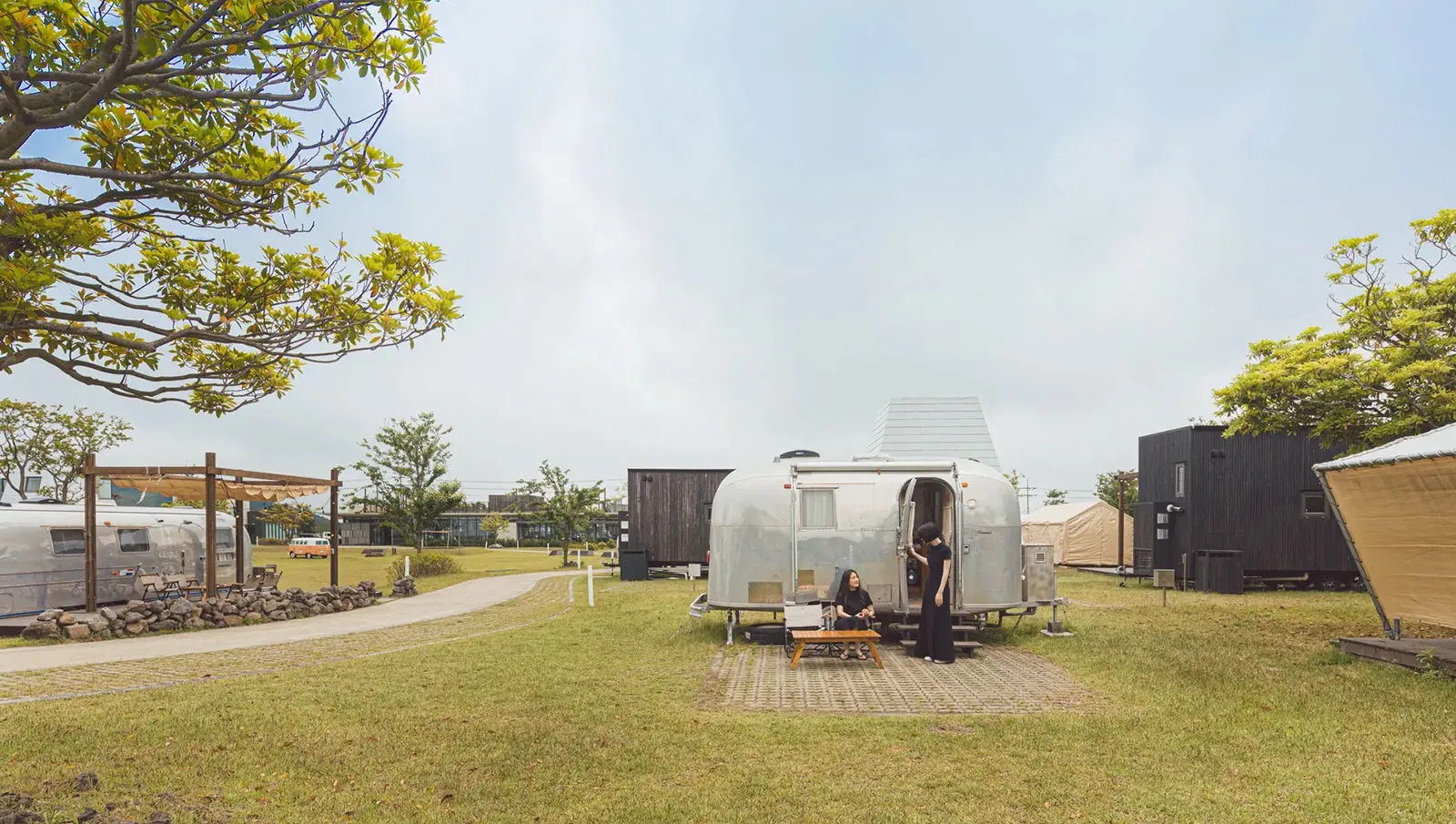
Around Follie in Seongsan-eup, Seogwipo, Jeju Island, offering the freedom of camping and secluded relaxation © STAYFOLIO.
-
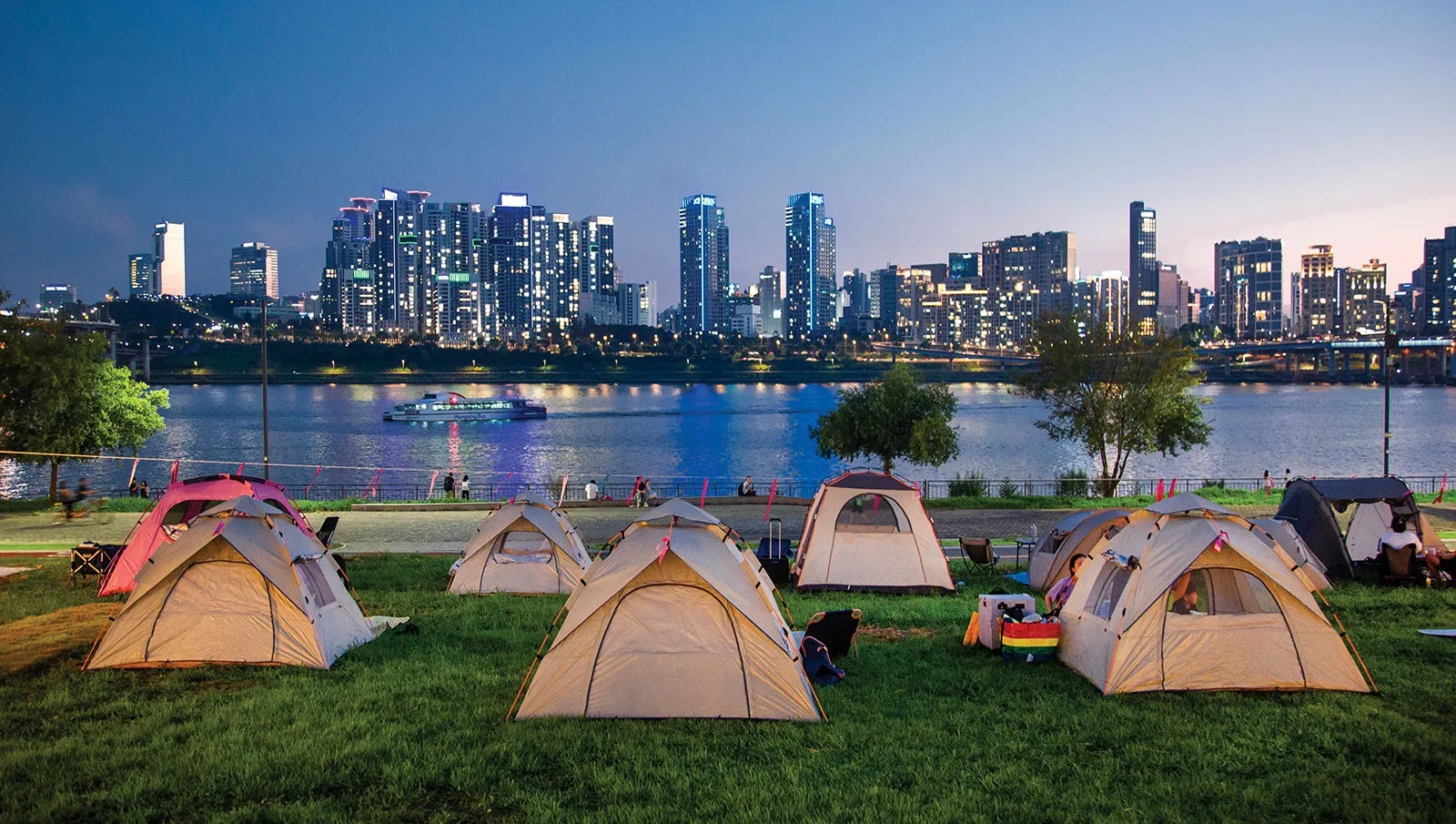
Seoul’s Hangang River is lined with expansive green spaces, featuring designated campgrounds alongside areas where visitors frequently pitch tents for half a day to unwind. © TongRo Images Inc.
-
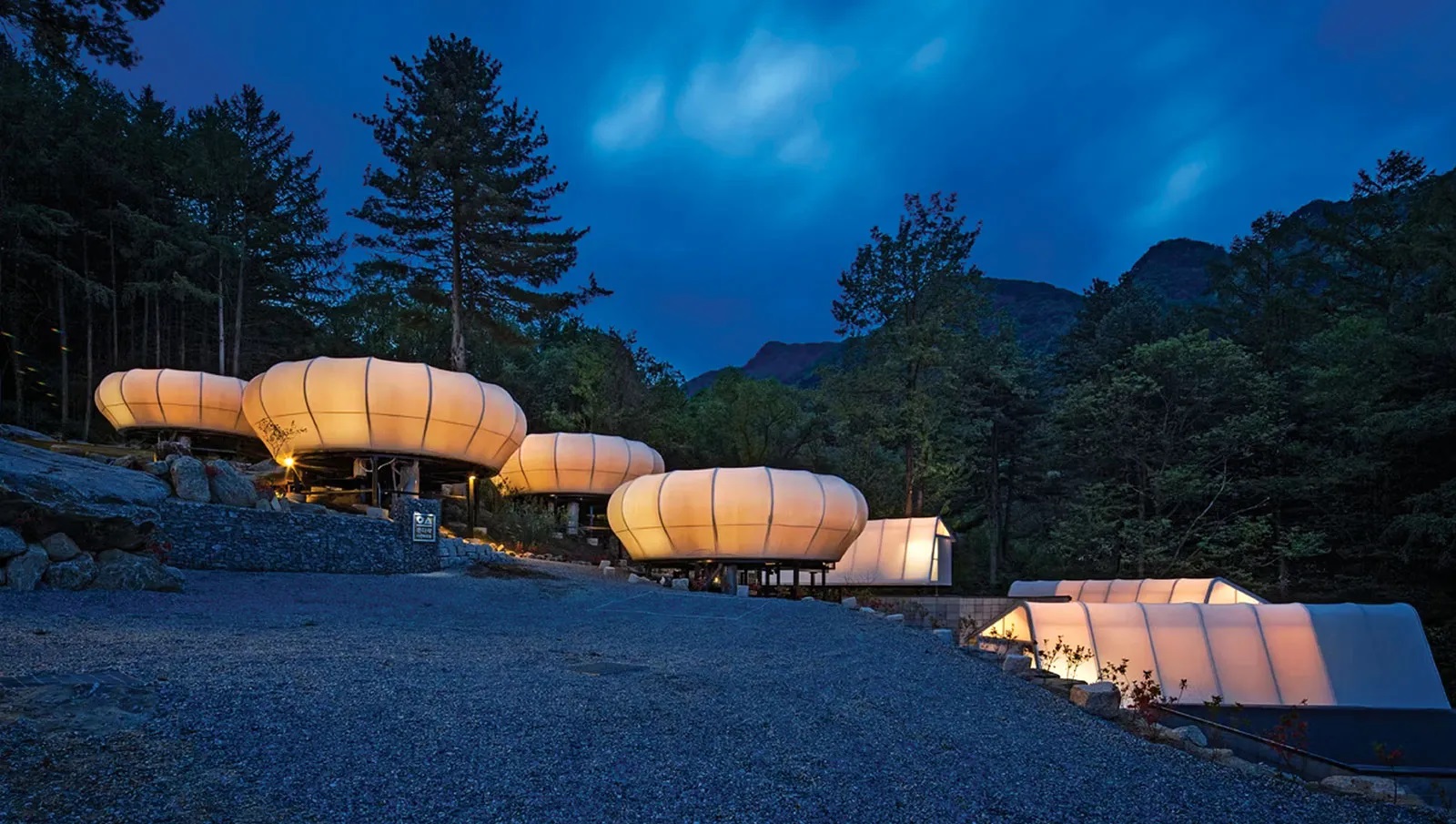
Korea also offers facilities where visitors can enjoy upscale camping. Shown is a panoramic view of Gapyeong On the Rock in Gapyeong-gun County, Gyeonggi-do Province © On the Rock.
The New Lifestyle Embodied by Korean Outdoor Culture
Ultimately, Korea’s current outdoor boom is not simply an expansion of sports and leisure. It is a new lifestyle born from the flexible dissolving of once-rigid boundaries between daily life and leisure, city and nature and survival and aesthetics. Those who grimly struggled through concrete jungles on weekdays now find balance and mental wellness by wearing sophisticated outdoor wear on weekends, traversing mountain ridges or pitching tents in forests.
If international visitors to Korea venture beyond Seoul’s glittering neon signs and shopping malls, they will discover the country’s mountains and campgrounds. Taking the subway in light sneakers, they can climb Inwangsan Mountain’s fortress walls or Bukhansan Mountain’s Baegundae Peak and witness the wondrous spectacle of the megacity sprawled beneath them. On the way down, they can immerse themselves in the warm, vibrant camaraderie found at mountain shelters or tucked-away local restaurants filled with Koreans. With some fortune, visitors might discover the experimental and sophisticated pop-up stores that outdoor brands operate around Seongsu-dong, where the merging of this culture with urban retail becomes visible. Korea’s outdoor culture offers a window into how Koreans balance urban intensity with natural escape—a balance that defines the country’s character.
Korea’s outdoor culture will keep evolving, driven by its distinctive energy and refinement. It treats nature not as something to conquer but as a sanctuary to recover from daily fatigue, connect with others and express personal taste. As it grows, it promises to open a new chapter in K-culture and offer a model for anyone rethinking what leisure and rest really mean.
-

The 15th anniversary pop-up store of Korean outdoor brand Helinox © Helinox.
-
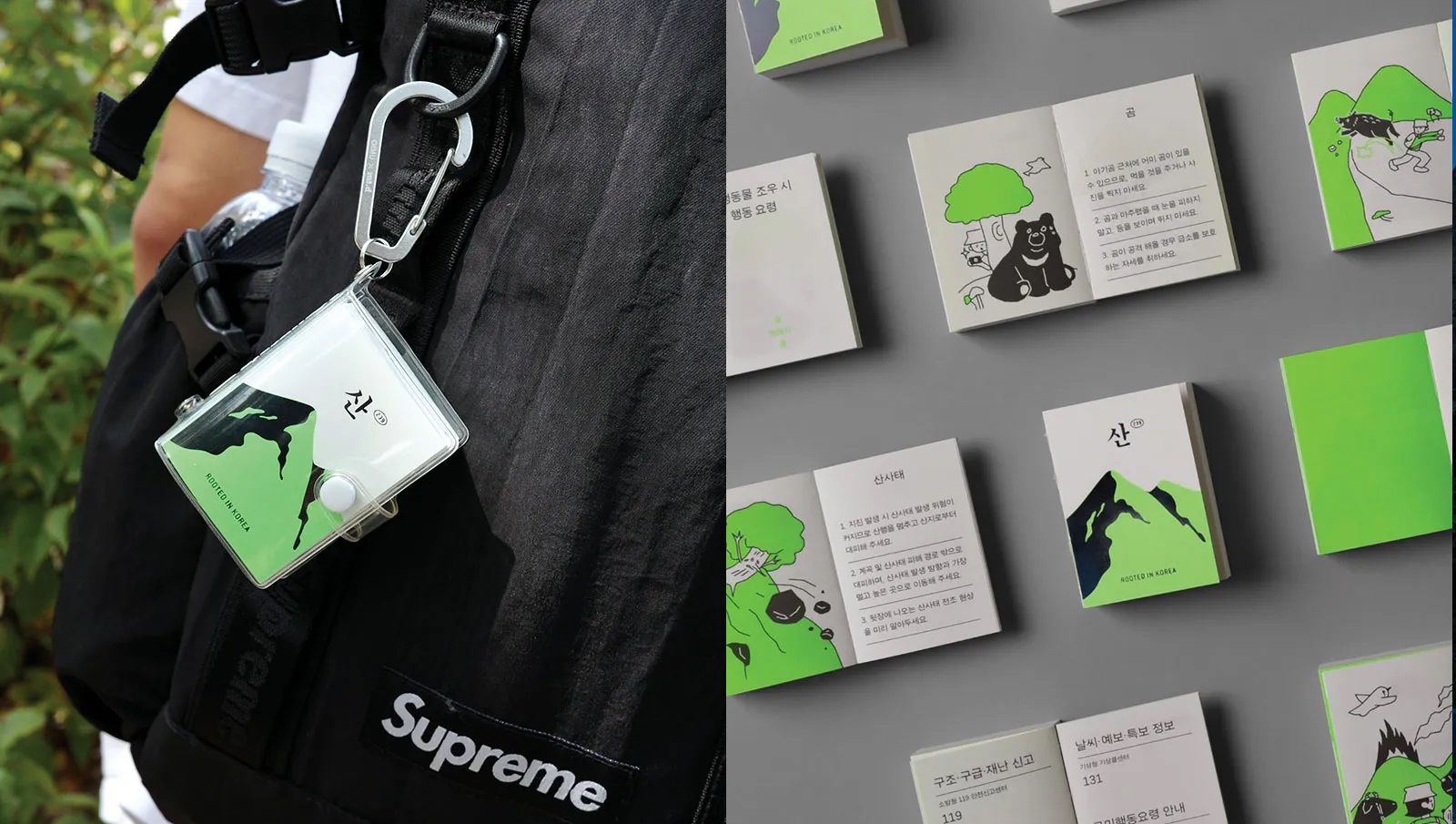
Designed in the shape of a miniature book, the hiking keyring brings together the stories of 239 Korean mountains alongside their iconic summit stones © mt.d, OIMU.
Writer HwanKi Kim
Former Editor-in-Chief of “Go Out Korea” magazine and current Director at “Welter Experiment” and Editor-in-Chief of “Portable Magazine,” he specializes in outdoor culture journalism that bridges urban life and nature.
